
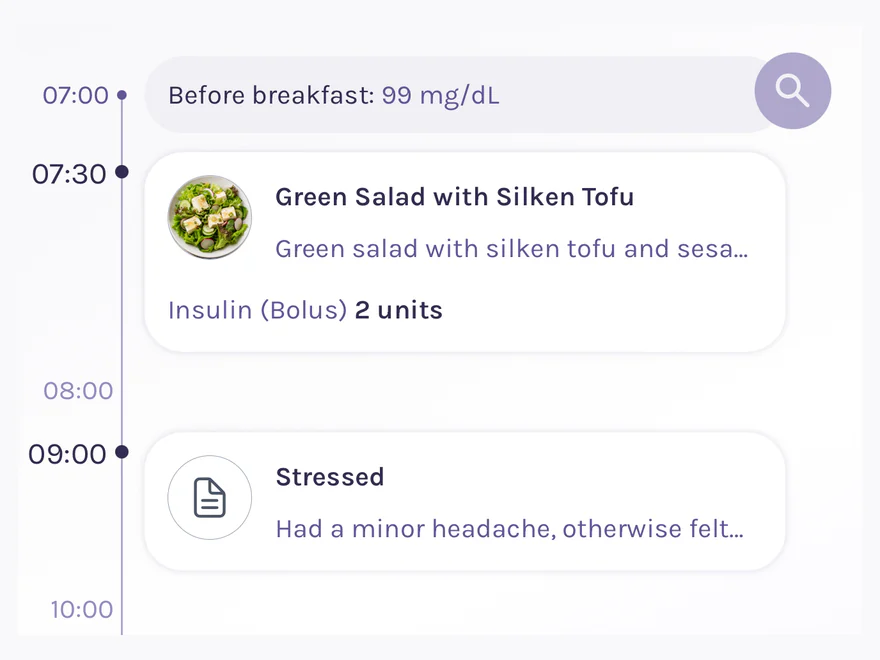
Track your meals, exercise & more.
Meals, insulin, workouts and notes on one timeline, next to your readings.

It reads your CGM, your meals, your workouts, your sleep and your heart rate, and turns the numbers into understanding.
Why Gluc
CGM, watch, ring: the measuring is done, scattered across as many apps. What's missing is the part that reads it all together and tells you what mattered. That part is Gluc.
Daily highlights
Other AI assistants wait for your questions. Gluc already has the answers. Every day it reads your glucose, meals and workouts together and tells you what mattered: the hours you ran high, the meals with the biggest rises, the days you stayed steady, what changed on workout days.
Mornings stayed steady
Your glucose averaged 131 mg/dL in the mornings with 96% time in range — your steadiest stretch of the day.
Afternoons and evenings ran higher
Glucose was higher from 2 p.m. to 9 p.m., averaging 156 mg/dL with time in range dropping to 66%.
Dinners saw bigger rises
After your 9 dinners, glucose rose an average of 77 mg/dL two hours later — compared to 41 mg/dL after lunch.
Walks changed dinner
On the 5 evenings with a walk after dinner, glucose peaked 38 mg/dL lower than on evenings without one.
Your flattest and steepest meals
Of the meals you logged 3+ times, the chicken salad rose the least (+22 mg/dL) and the burrito the most (+91).
Early rises, before eating
Glucose climbed 30 mg/dL between 4 a.m. and 7 a.m. on 6 of 7 days, before anything was logged.
Weekends ran higher
Weekend mornings averaged 24 mg/dL above weekday mornings.
“Stressed” afternoons
On the 3 days you noted stress, afternoons ran 20 mg/dL higher.
Glucose fell during runs
On your 4 run days, glucose fell an average of 38 mg/dL during the workout.
Late dinners, higher nights
On the 5 nights you ate after 9 p.m., glucose averaged 162 mg/dL at midnight — compared to 118 mg/dL on other nights.
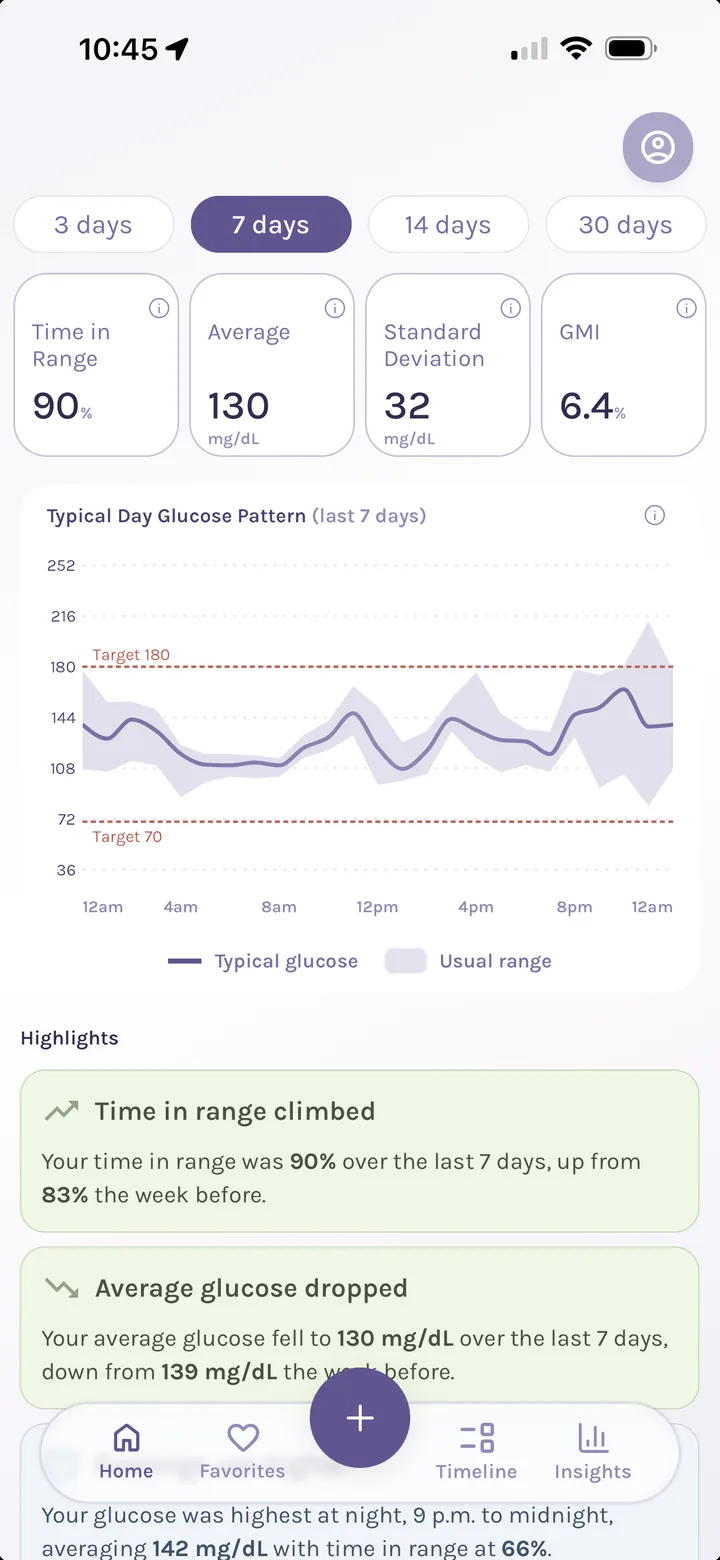
Time in range climbed
Your time in range was 90% over the last 7 days, up from 83% the week before.
Average glucose dropped
Your average glucose fell to 130 mg/dL over the last 7 days, down from 139 mg/dL the week before.
AI meal scanning
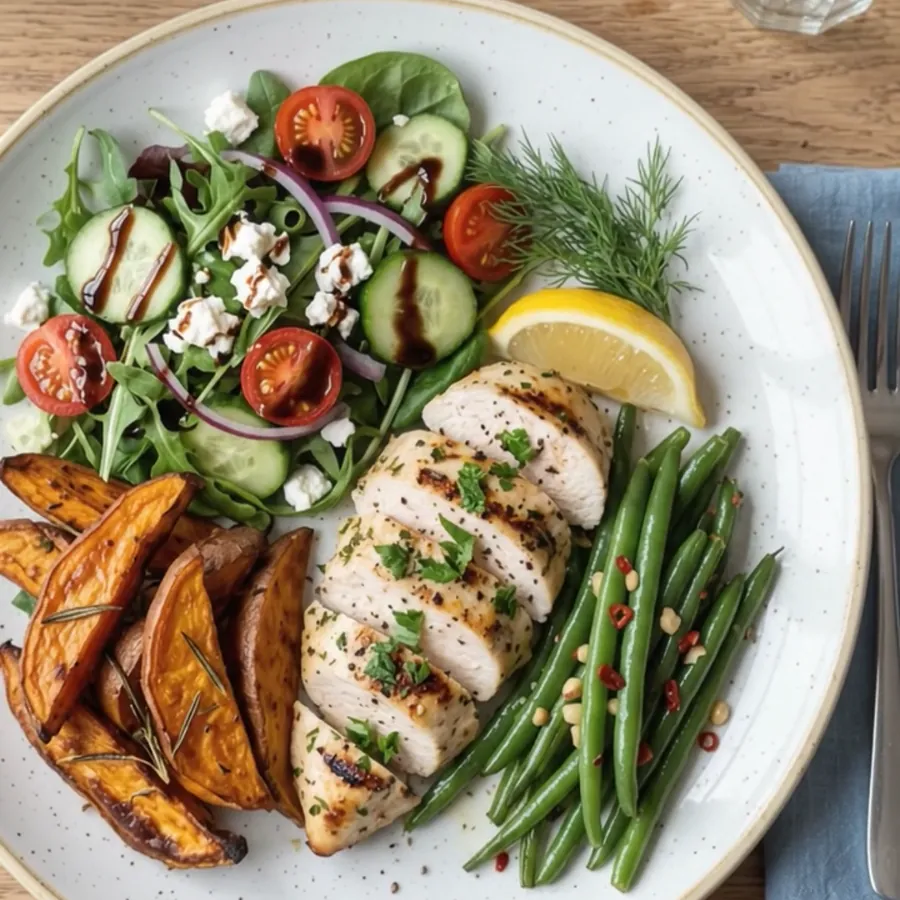
Gluc turns a photo into ingredients, portions and nutrition, and puts the meal on your timeline beside the readings that came after. Adjust any ingredient or its weight, tell the AI what the camera couldn't see, or import a recipe and reuse your favorites.
How it works
Meals, insulin, workouts and notes on one timeline, next to your readings.
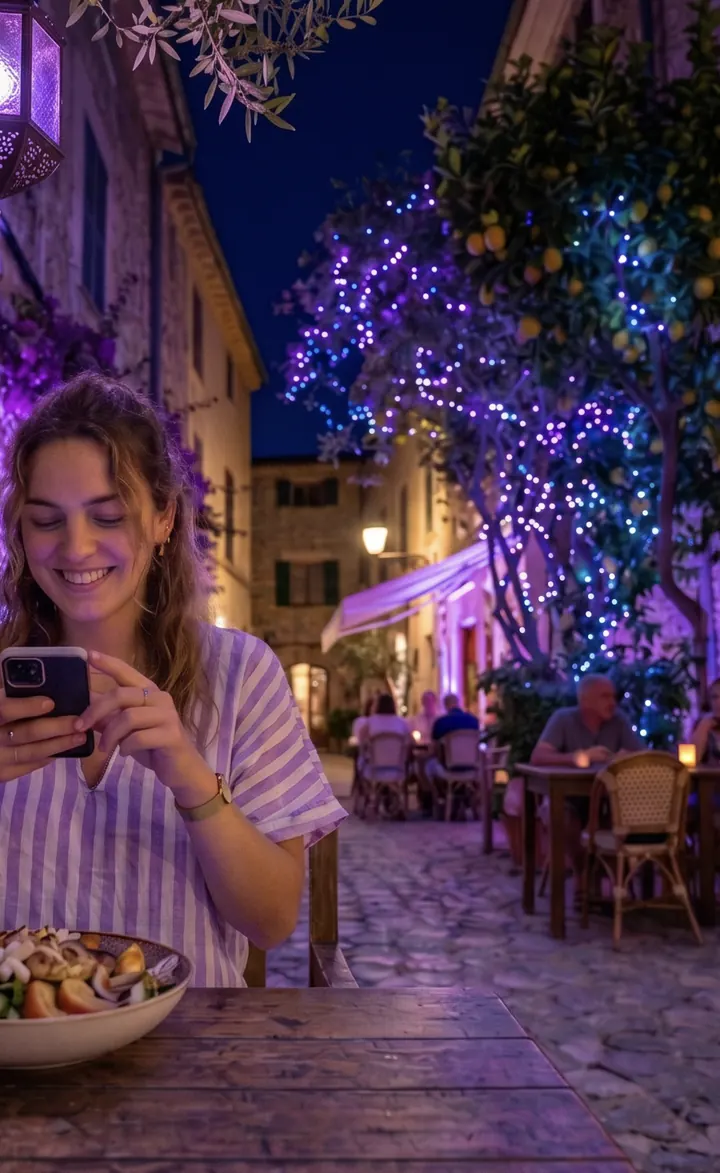
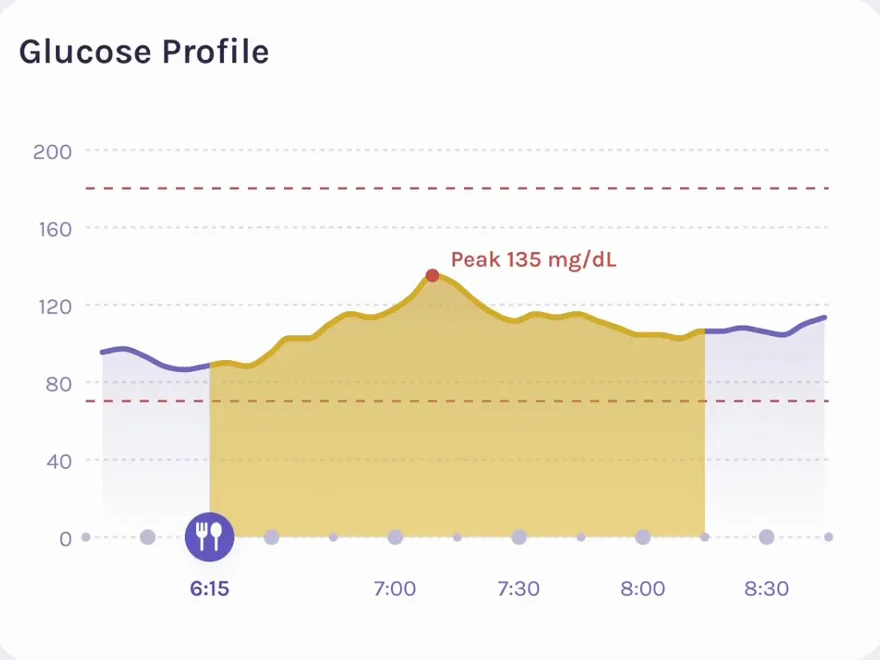
Each meal you log becomes one you can compare against, with the glucose response beside it.

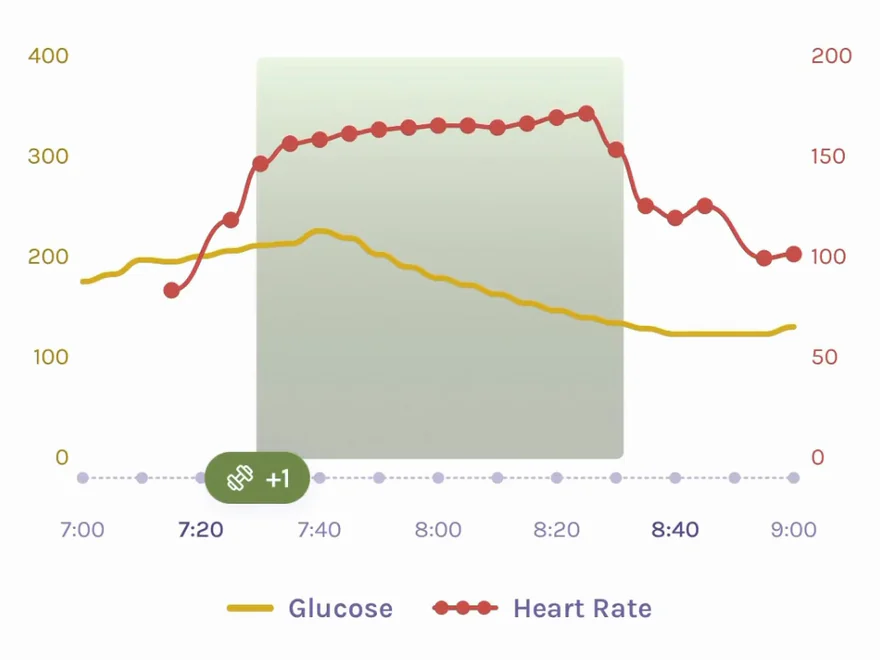
No manual logging. Glucose and workouts flow in from Dexcom and your watch.
“Love how the data is presented visually and the AI gives a good summary of what I need to focus on.”
FAQ
Still have a question? Email us.
Gluc reads your data from Apple Health, so it works with Dexcom G7 and Dexcom Stelo, and with Apple Watch, Garmin, Fitbit and Polar watches. Other CGMs and wearables work too, as long as their app shares data with Apple Health, and we are working on adding support for more CGMs.
Gluc was designed to be used with a CGM, although you can still scan meals and log insulin, exercise and notes without one.
No carb estimate is 100% accurate, whether it comes from an app or from eyeballing your plate. That's why Gluc makes it easy to adjust each ingredient's nutrition, unlike many other apps.
No. Gluc is a wellness tool. It doesn't diagnose or treat anything, and it doesn't replace your CGM's alerts or your care team.
Your data is encrypted in transit and at rest, and your health data is never sold or used for ads. You choose what Gluc reads from Apple Health, and you can delete your account anytime in the app. Read our Privacy Policy and Consumer Health Data Policy.
Not yet. Gluc is currently available for iPhone, on iOS 18.6 or later. An Android version is coming.

See your readings alongside your meals and workouts, with insights that reveal the patterns behind them.
Scan with your iPhone camera